Personalised treatments
Comprehensive dentistry
Community and trust
Personalised treatments
Comprehensive dentistry
Community and trust

Polynucleotide treatment supports your skin’s own repair processes, helping to improve hydration, elasticity and overall skin quality from within. Polynucleotides work with your skin’s own regenerative processes to create subtle improvements that continue to develop over time.
What are polynucleotides?
Polynucleotides are bio-stimulating treatments designed to improve skin quality by supporting the body’s natural repair mechanisms. Made from highly purified DNA fragments, they work by stimulating fibroblasts – the cells responsible for producing collagen and elastin. These proteins provide the skin with its strength, elasticity and structure, but their production naturally declines over time.
Unlike dermal fillers, polynucleotides don’t restore volume or alter facial contours. Instead, they focus on improving the condition of the skin itself, helping it become firmer, better hydrated and more resilient.
Treatment is commonly used on the face, neck and delicate under-eye area, where skin often shows some of the earliest signs of ageing.
It may be recommended if you’re noticing:
Because polynucleotides work by supporting tissue regeneration. They’re ideal for patients who want gradual, natural-looking improvements that develop over time.

Collagen and elastin production slows, hydration decreases, and the skin gradually loses strength and resilience. Once inserted, polynucleotides stimulate fibroblasts to produce new collagen and elastin while supporting the skin’s natural repair processes. They also help improve hydration and create an environment where healthy tissue can regenerate more effectively.
Rather than creating an immediate change, improvements develop gradually as your skin renews itself over the following weeks. Many patients notice smoother texture, improved elasticity and healthier-looking skin as collagen production continues.
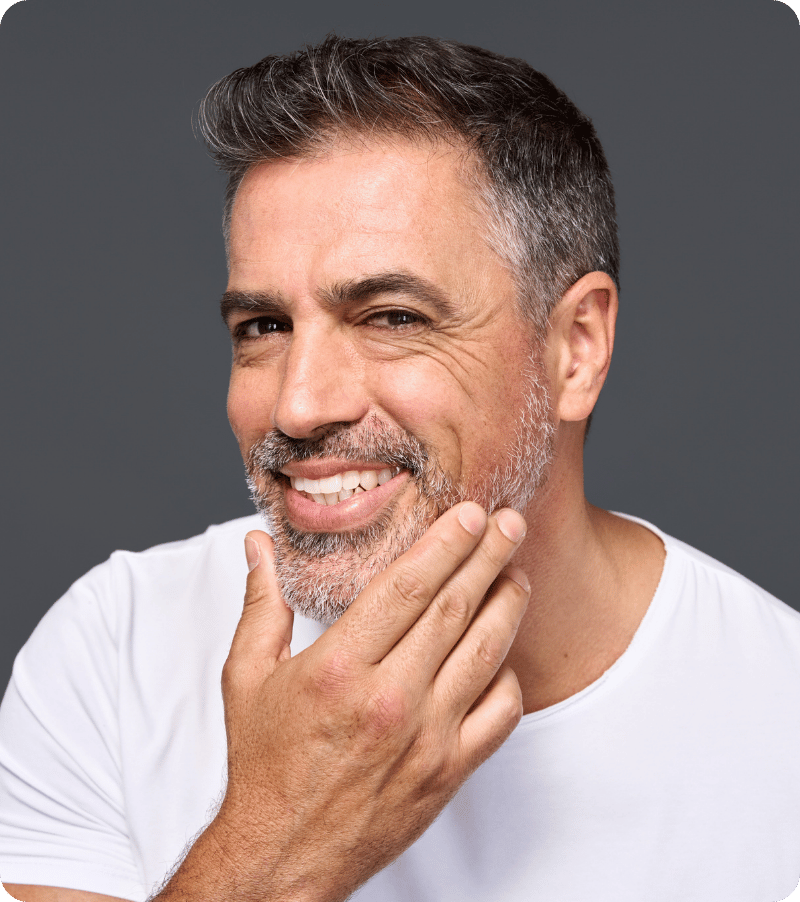
Polynucleotides aren’t designed to dramatically change the way you look. The improvements happen gradually, so having someone who understands your skin and can give you realistic expectations from the outset is important.
At Drayton House, your treatment will be carried out by Dr Rakhee Raichoora, a qualified dentist and advanced facial aesthetic practitioner. Her clinical background gives her a detailed understanding of facial anatomy and skin health, which she brings to planning regenerative treatments such as polynucleotides.
Rakhee will look carefully at the condition of your skin and spend time talking to you about what you’d most like to improve. She’ll explain where polynucleotides could help, what changes you can realistically expect and how your results are likely to develop over time.
You’ll also have the chance to ask questions and get to know Rakhee before making any decisions. The aim is for you to feel comfortable with both the treatment and the person providing it, with a plan that’s genuinely suited to your skin rather than simply based on the treatment you’ve walked in asking for.


Amazing service. I was so nervous before I came to the dental practice, but the staff are so sweet, and they look after you. Dr Ria is just the right dentist...
Ausra
This is one of the best Dental Practices in the UK. The doctors and staff are amazing; their service is just perfect- reminders on time and a great all-round experience.
Brad M
Great staff and excellent service.
Sandeep Patel
Good dental practice, nice staff and very professional.
Jonny Kad
Excellent caring service.
Ant Shedend
Such a wonderful practice. Lovely, professional, kind and fair prices. Cured my fear of dentistry.
Alexander Penn
I joined one of the care plans in Drayton House about 4 years ago and have kept it. After my visits and nice experiences, I recommended it to my friends. All...
Jing C
Excellent dental practice. Dr Ria has always been fantastic, especially in arranging my son’s referral for treatment, and a special thank you to Julia at reception, who went above and beyond...
Lediona Hima
We have been going to Drayton House Dental Practice for over 40 years. I've never found such a good, kind and friendly practice. When we moved to Brighton, we still visit...
Ann Slight
I have complete faith in this practice - they are reliable, totally committed and wonderfully competent. I know they are looking after me.
Jillie Sutton
Amazing service. I was so nervous before I came to the dental practice, but the staff are so sweet, and they look after you. Dr...
Ausra
This is one of the best Dental Practices in the UK. The doctors and staff are amazing; their service is just perfect- reminders on time...
Brad M
Great staff and excellent service.
Sandeep Patel
Good dental practice, nice staff and very professional.
Jonny Kad
Excellent caring service.
Ant Shedend
Such a wonderful practice. Lovely, professional, kind and fair prices. Cured my fear of dentistry.
Alexander Penn
I joined one of the care plans in Drayton House about 4 years ago and have kept it. After my visits and nice experiences, I...
Jing C
Excellent dental practice. Dr Ria has always been fantastic, especially in arranging my son’s referral for treatment, and a special thank you to Julia at...
Lediona Hima
We have been going to Drayton House Dental Practice for over 40 years. I've never found such a good, kind and friendly practice. When we...
Ann Slight
I have complete faith in this practice - they are reliable, totally committed and wonderfully competent. I know they are looking after me.
Jillie Sutton
Amazing service. I was so nervous before I came to the dental practice, but the staff are so sweet, and they...
Ausra
This is one of the best Dental Practices in the UK. The doctors and staff are amazing; their service is just...
Brad M
Great staff and excellent service.
Sandeep Patel
Good dental practice, nice staff and very professional.
Jonny Kad
Excellent caring service.
Ant Shedend
Such a wonderful practice. Lovely, professional, kind and fair prices. Cured my fear of dentistry.
Alexander Penn
I joined one of the care plans in Drayton House about 4 years ago and have kept it. After my visits...
Jing C
Excellent dental practice. Dr Ria has always been fantastic, especially in arranging my son’s referral for treatment, and a special thank...
Lediona Hima
We have been going to Drayton House Dental Practice for over 40 years. I've never found such a good, kind and...
Ann Slight
I have complete faith in this practice - they are reliable, totally committed and wonderfully competent. I know they are looking...
Jillie Sutton
Polynucleotides are a bio-stimulating treatment that encourages the skin to repair itself by stimulating collagen and elastin production. Rather than adding volume, they improve skin quality and resilience over time.
They can improve skin firmness, hydration, elasticity and texture while helping to soften fine lines and improve the appearance of dull or crepey skin. They’re also commonly used to rejuvenate the delicate under-eye area.
Both treatments improve skin quality, but they work in different ways. Profhilo® focuses on deep hydration and improving firmness, while polynucleotides stimulate the skin’s natural repair processes to support tissue regeneration and improve overall skin resilience.
Dermal fillers restore volume and enhance facial contours. Polynucleotides don’t alter facial shape. Instead, they improve the health and quality of the skin itself through collagen and elastin stimulation.


Treatments
Terms