Invisalign® uses a series of custom-made clear, removable aligners to gradually move your teeth into better positions. Each aligner applies gentle, controlled pressure to gradually move your teeth towards their planned positions. They’re discreet enough to fit into everyday life and removable when you eat, drink and brush your teeth. At Drayton House, we’ll plan your treatment around your teeth, your bite and the result you’d like to achieve, so you have a clear idea of what’s possible before you begin.
Good Invisalign® treatment isn’t simply about making teeth look straighter. How your teeth fit together matters too. We’ll assess your smile as a whole before planning how each tooth needs to move. Digital technology allows us to plan your treatment in detail and gives you a much clearer idea of the changes we’re working towards.
Once you’re happy with the plan, your custom aligners can be made. You’ll wear each set for the recommended amount of time before moving on to the next, with appointments at Drayton House along the way so we can check your progress.
Reaching the end of your aligners doesn’t necessarily mean your smile is finished. Once your teeth are in their new positions, we’ll discuss retainers to help keep them there. Teeth naturally have a tendency to move over time, so retention is an important part of protecting the result you’ve worked for. Some patients may also decide they’d like to make finishing touches to their smile after straightening, such as professional teeth whitening. We’ll talk through any suitable options once your Invisalign® treatment is complete.
Invisalign® gives us the technology to move teeth, but getting a result you’re happy with still comes down to how your treatment is assessed, planned and monitored. We’ll spend time understanding what you actually want to change about your smile rather than assuming perfectly straight teeth are everyone’s goal. You’ll be able to talk through the result you have in mind, see how we plan to get there and ask questions before committing to treatment.
Your Invisalign® journey will be overseen by a dental professional who understands not just how you’d like your smile to look, but your teeth, gums and bite as a whole. We’ll keep an eye on your progress throughout treatment and make adjustments to the plan where they’re needed. We want you to feel comfortable with the people looking after you as well as confident in the plan we’ve created together.
Award-winning customer service
Free initial consultation worth £95
Teeth whitening worth £295, included for free
Feel confident wearing clear, nearly invisible retainers
Beautiful teeth in as little as three months, using safe cosmetic braces
Crowded teeth is a condition where you do not have enough room for your teeth to fit normally. This can cause plaque or tartar and other harmful bacteria to build up as it is harder for you to brush and floss well.
Gaps between teeth is when there is extra space between two or more of your teeth. This can cause pockets between your teeth and gums and can cause food to get stuck making them tender and sore. This might also lead to gum disease.
An Open bite is when your upper and lower teeth don't touch when you close your mouth. An open bite can make it hard for you to chew or difficult to bite even the most common of food like apples.
An underbite is when you close your mouth and your lower front teeth are in front of your upper teeth. In many cases, this is actually a problem with your lower jaw being too far forward. An underbite can make it hard to chew properly and speak clearly, and it might cause your teeth to wear down more quickly.
An overbite is when your upper front teeth overlap with your lower front teeth. Most people have at least a little overbite. When your overbite is too large, your doctor might tell you you have a deep bite. This can cause problems, from your teeth wearing down to pain in your jaw.
A crossbite is when you close your mouth and yet some of your upper teeth are sitting inside your lower teeth rather than on the outside. A crossbite can make your teeth wear down or chip. It can also make your gums start to recede or make little notches above your gum line. This kind of damage can lead to painful gum problems or even bone loss.
Many people worry about the cost of Invisalign braces, and so we have devised a number of payment plans to help you afford the right treatment with Invisalign®. Invisalign braces from £2.50 per day with our finance options.
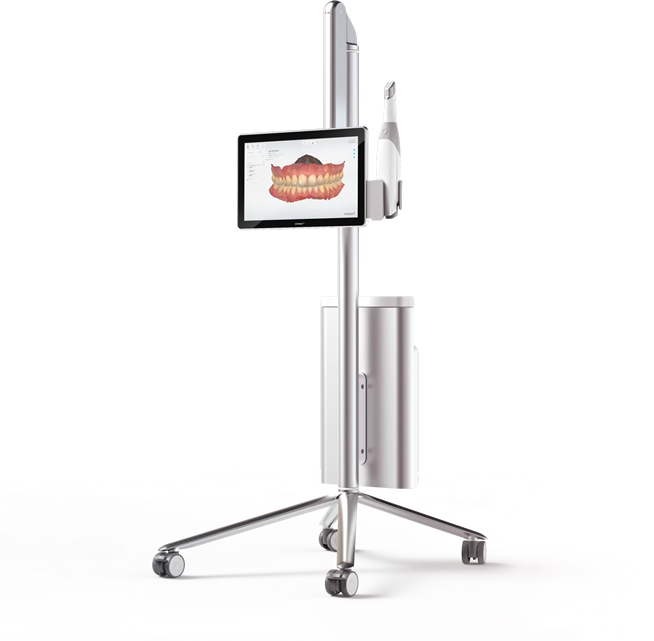
Learn moreWe can create a 3D image of your teeth in just minutes using an TRIOS 3D scanner, a leading digital scanner from the makers of Invisalign® clear aligners.

Invisalign® uses a sequence of custom-made clear aligners to gradually move your teeth. You’ll change to a new set of aligners at regular intervals as your teeth progress towards their planned positions.
Treatment time depends on how much your teeth need to move and the complexity of your case. We’ll give you a clearer indication of your expected treatment time once we’ve assessed your teeth and created your treatment plan.
Invisalign® aligners need to be worn for most of the day and night to move your teeth predictably. You’ll remove them for eating, drinking anything other than water, and cleaning your teeth. We’ll give you clear instructions on wear time when your treatment begins.
Yes. Because the aligners are removable, you take them out before eating and can continue enjoying your usual foods. You’ll need to clean your teeth before putting the aligners back in.
You may notice some pressure or tenderness when you begin wearing a new aligner. This is usually mild and is a sign that the aligners are moving your teeth.
Yes. Retainers help keep your teeth in their new positions once active treatment has finished. We’ll explain your retention plan towards the end of your Invisalign® treatment.
Yes, professional teeth whitening can be a great finishing touch once your teeth have been straightened. If it’s something you’re interested in, we can discuss the most appropriate time to whiten your smile.
Treatments
Terms